

Morgan & James is a real estate agency that helps investors from the UAE buy, manage, and profit from property in Morocco. We cover villas, apartments, commercial buildings, land, farms, and hotel businesses across Tangier, Casablanca, Rabat, Marrakech, and other major Moroccan cities.
Our team works in both English and Arabic, so Emirati buyers deal with us directly, in their own language, from first viewing to signed deed.
If you are an Emirati investor looking at Morocco, here is the short version. Foreign nationals, including UAE citizens, can buy most types of property in Morocco freely. There is no residency requirement to own a home or commercial unit. You can repatriate rental income, and resale proceeds if you register the investment correctly with the bank at the time of purchase.
The two things that need care are agricultural land and getting your money structured properly from day one. We handle both.
This page explains what we do, where we work, how the process runs for a UAE buyer, and what it costs. There is a full FAQ at the end.
Why Emirati investors are looking at Morocco?
Morocco sits a short flight from the Gulf, shares the language and the faith, and runs a property market priced well below Dubai, Abu Dhabi, or southern Europe. For an Emirati buyer, that combination is rare.
A few reasons it keeps coming up:
- Familiar culture, easy travel
Direct flights connect the UAE to Casablanca, Marrakech, and Tangier. Arabic is an official language. Friday is Friday. - Entry prices well below Gulf levels
A quality apartment in Marrakech or Tangier can cost a fraction of an equivalent unit in Dubai Marina. - Strong tourism and rental demand
Marrakech, Agadir, and the northern coast pull millions of visitors a year, which supports short-let and hotel income. - A government pushing big infrastructure
Morocco is co-hosting the 2030 FIFA World Cup with Spain and Portugal, and is spending heavily on stadiums, rail, and airports ahead of it. That spending tends to lift property values around the host cities. - No tax on the gain when you hold long enough
Capital gains relief increases the longer you own (see the tax section below).
What we help you buy

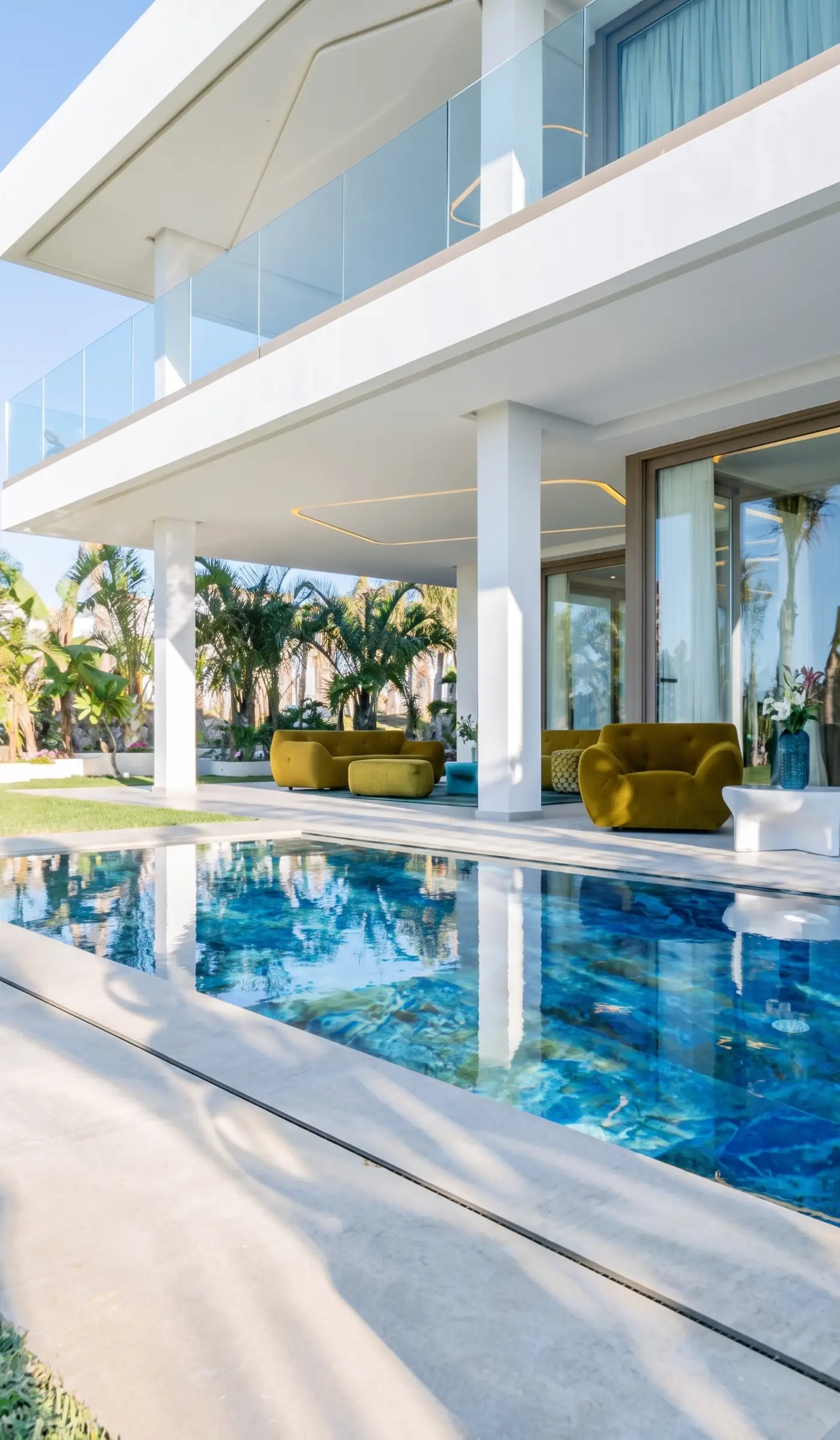
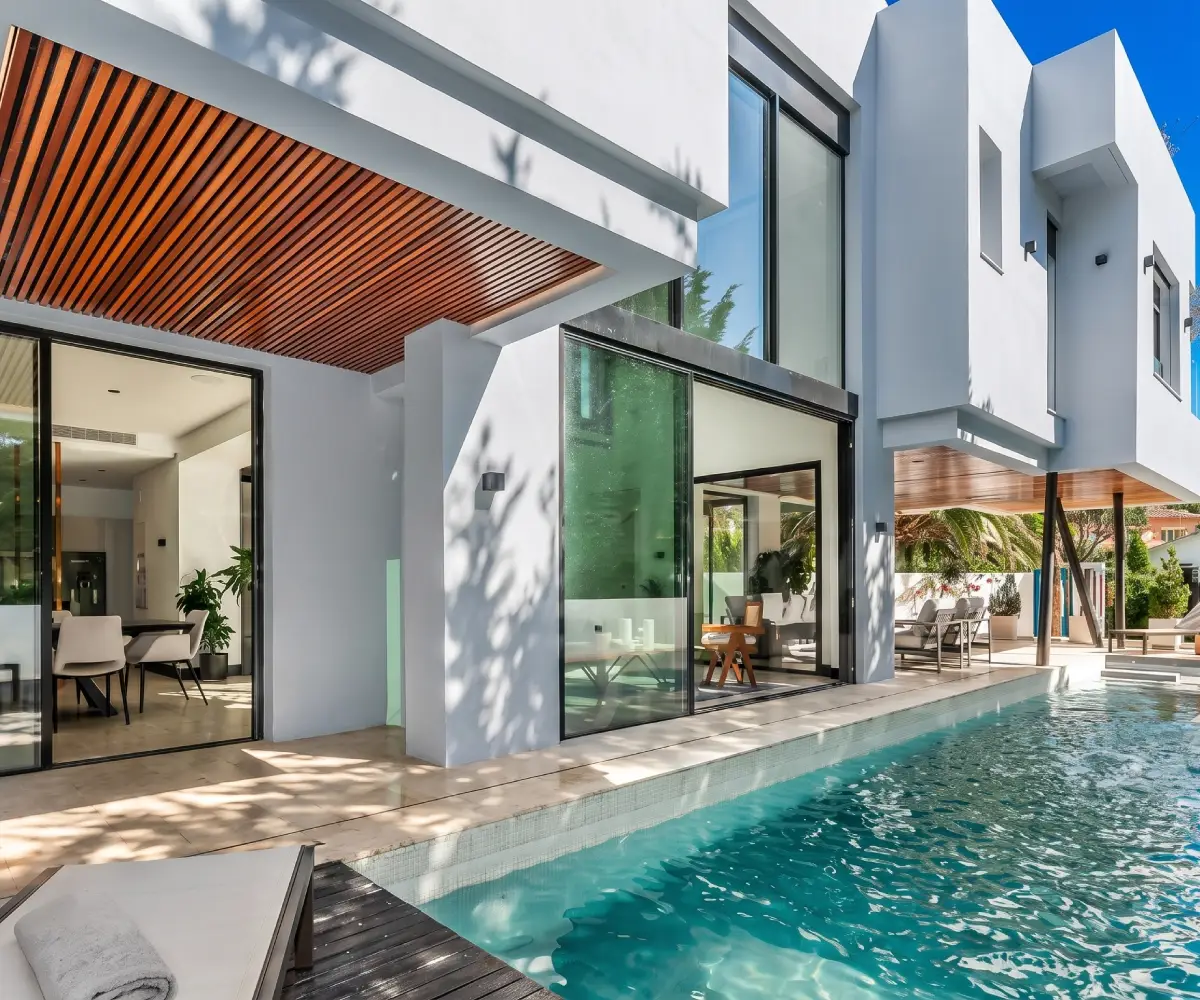
Buying a villa in Morocco
A villa is a standalone house with private land, often with a pool, garden, and staff quarters. In Morocco these range from medina riads in Marrakech to modern sea-view homes on the Tangier coast and gated golf villas around Agadir.
We help you with:
- Sourcing on and off market, including listings that never reach the public portals.
- Checking the title (the Titre Foncier) is clean and registered, not just held under an old undivided family deed.
- Verifying the build is legal, and the pool, extensions, and boundary walls are permitted.
- Negotiating price and handling the deposit through a notary, not the seller’s pocket.
Villas suit buyers who want a personal residence plus the option to short-let it through the high season.

Buying an apartment in Morocco

Buying a commercial building in Morocco
A commercial building is a property zoned and used for business, such as offices, retail units, a mixed-use block, or a small commercial centre.
These generate yield from tenants rather than holidaymakers, so the work is different. We review existing leases, tenant quality, the rent roll, service charges, and the zoning. We also check whether the building needs upgrades to meet current safety and accessibility rules before you can re-let it. Casablanca, as Morocco’s business capital, holds most of the country’s serious commercial stock.

Buying land in Morocco
Land here means a registered plot you can build on, hold, or develop. Buildable land near growing cities can be one of the strongest plays in Morocco, but it is also where the most mistakes happen.
The two questions that decide everything are the title and the zoning. We confirm the land has a clean Titre Foncier and pull the urban plan (the plan d’aménagement) to see what you are actually allowed to build, how high, and how much of the plot you can cover. A plot sold as “buildable” that the town hall has zoned green space is worth a fraction of what the seller claims.

Buying an agricultural farm in Morocco
Here is where Emirati and other foreign buyers need clear advice, not a sales pitch.
Foreign nationals cannot freely buy agricultural land in Morocco. Farmland is protected. A foreigner who wants to own it generally needs the land’s status changed to non-agricultural (a process called vocation non agricole), or has to hold it through an approved structure, often a Moroccan company set up for the purpose. There are working routes for olive groves, citrus farms, argan estates, and agritourism projects, but every one of them runs through the right legal structure.
We do not pretend this is a simple cash purchase. We work with Moroccan property lawyers to set up the correct holding structure and confirm what is and is not possible for your specific plot before you spend anything.

Buying or running a hotel business in Morocco
A hotel investment in Morocco can mean three different things: buying the building only, buying the operating business, or buying both. Each has its own checks.
Riads converted into boutique guesthouses in the Marrakech and Fès medinas, sea-view hotels in Tangier and Agadir, and small resorts in the Atlas foothills all come up regularly. We review the licence to operate, the classification (stars), staff contracts, supplier deals, online reviews and booking history, and the real numbers behind the asking price. Tourism is one of Morocco’s biggest industries, and a well-run hotel can deliver both income and a clear exit.
Where we work across Morocco

Tangier

Casablanca
Rabat

Marrakech
Other cities we cover
- Agadir for beach resorts, golf villas, and family holiday homes on the Atlantic.
- Fès for medina riads and heritage hotel conversions.
- Essaouira for boutique coastal property and a growing artistic, surf-driven rental market.
- Dakhla for new tourism and watersports development on the southern coast.
If you have a city in mind that is not listed, tell us. We will tell you honestly whether it makes sense.
How Morgan & James helps Emirati investors, step by step

We listen first

We shortlist and view for you

We check everything before you pay
Title, zoning, permits, debts on the property, and the seller’s right to sell. In Morocco this matters more than the brochure. We use the Titre Foncier system and a notary to confirm clean ownership.

We structure your money correctly
This is the step most foreign buyers get wrong. To repatriate your rental income and resale proceeds later, the investment has to be registered with a Moroccan bank as a foreign-currency investment at the time of purchase. We set this up at the start so your capital can come back out.

We close through a notary
A Moroccan notary (adoul or notaire) holds the deposit, prepares the deed, and registers the title in your name. You can sign in person or through a power of attorney we arrange.

We hand over, or we manage
Once you own it, we can manage the property, find tenants, run the short-let, or oversee a renovation. You stay in Dubai or Abu Dhabi; we stay on the ground.
We work in English and Arabic
Every Emirati client deals with us in Arabic if they prefer, both spoken and in writing. Contracts in Morocco are usually in French and Arabic, so we translate and explain every clause before you sign. Nothing gets lost between languages.
The advantages of buying through Morgan & James Real Estate Agency
- One team, both languages. You speak to us in Arabic or English, not through three middlemen.
- We work for the buyer, not the seller. Our job is to protect your money, find the right property, and negotiate the price down.
- Full legal and title checking. We confirm clean ownership before a dirham leaves your account.
- Money structured for repatriation. We register the investment correctly so your income and resale funds can leave Morocco.
- End-to-end, remotely. Sourcing, viewing, due diligence, signing, and management, run from your phone in the UAE.
- Local market knowledge. We know which districts are rising, which developers deliver, and which “bargains” are problems.
Worked examples
A rental apartment in Tangier
An Emirati investor wants steady income near the sea. We source a two-bedroom seafront apartment, confirm the building’s handover certificate, and register the purchase for repatriation. The unit is let long-term to a professional tenant, and the investor receives rent transferred to the UAE each year.
A Marrakech riad as a short-let
A family wants a holiday home that pays for itself. We find a restored riad in the medina, check the title and the tourism licence, and set it up on short-let platforms managed by our team. The family uses it for several weeks a year and the rest of the season covers the running costs.
A boutique hotel in Fez
An investor wants a business, not just bricks. We review a small guesthouse’s licence, booking history, and accounts, negotiate the price down after due diligence, and structure the purchase through a Moroccan company. The investor steps into a running operation with existing staff and reviews.
Frequently asked questions
Can a UAE citizen buy property in Morocco?
Yes. Foreign nationals, including UAE citizens, can buy most residential and commercial property in Morocco with full freehold ownership. You do not need to be a resident. The main restriction is on agricultural land, which foreigners cannot freely own.
Do I need to live in Morocco to own property there?
No. There is no residency requirement to own a home or a commercial unit. Many of our Gulf clients own property in Morocco while living full-time in the UAE.
Can I get my rental income and sale proceeds back to the UAE?
Yes, if you set it up correctly. The investment must be registered with a Moroccan bank as a foreign-currency investment at the time of purchase. Do this, and you can repatriate rental income and resale proceeds. Skip it, and getting money out becomes difficult. We handle this registration as standard.
Can foreigners buy farmland or an agricultural farm in Morocco?
Not directly. Agricultural land is protected, and foreigners cannot freely own it. The usual routes are changing the land’s status to non-agricultural, or holding it through an approved Moroccan company. We set up the correct structure with a Moroccan lawyer before you commit.
What taxes will I pay when buying and owning property in Morocco?
Buyers typically pay registration and notary fees on purchase, plus an annual property tax once you own. Rental income is taxable in Morocco. On resale, capital gains tax applies, but relief increases the longer you hold, and a long enough holding period can reduce it significantly.
How long does it take to buy a property in Morocco?
Once you have chosen a property and the title checks are clean, a straightforward purchase usually completes within a few weeks. The timeline depends on the due diligence, the notary, and whether you sign in person or by power of attorney.
Which Moroccan city is best for investment?
It depends on your goal. Choose Casablanca for commercial yield, Marrakech and Agadir for tourist short-lets, Tangier for sea-view growth, and Rabat for stable long-term residential income. We match the city to what you want the money to do.
Can I buy in Morocco without travelling there?
Largely, yes. We view for you with video and live calls, run the due diligence, and can sign on your behalf through a power of attorney. Most clients make one trip, though you can complete remotely if needed.
Do you speak Arabic?
Yes. Our team works in both Arabic and English, and we translate the French and Arabic contract clauses so you understand exactly what you are signing.
Talk to us about investing in Morocco
If you are in the UAE and thinking about Moroccan property, we can tell you in one call whether your goal is realistic, where to look, and what it will cost. We work in Arabic and English, and we work for you, the buyer.